
Money Trauma: The Silent Epidemic Wrecking Your Mind and Body – How Financial Stress Destroys Health and What You Can Do About It
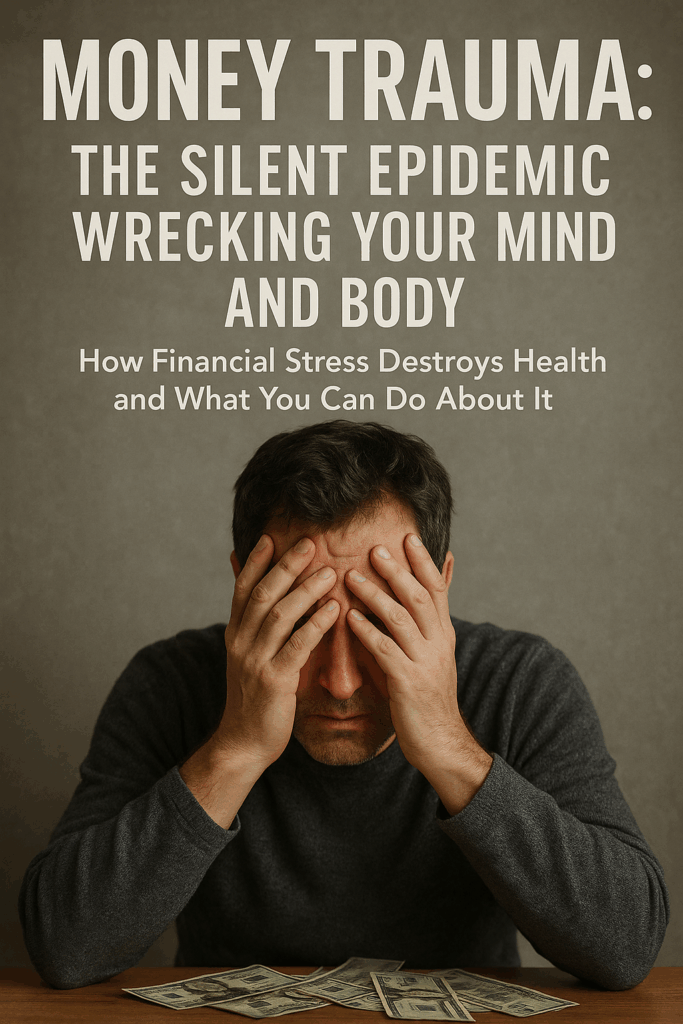
Money trauma isn’t just about having a bad day at the bank or feeling stressed about bills. It’s a deep-rooted psychological and physiological response that affects millions of Americans, silently wreaking havoc on both mental and physical health. This financial stress epidemic has reached crisis proportions, with studies showing that money trauma impacts over 70% of adults in the United States, yet most people don’t even recognize they’re suffering from it.
The insidious nature of money trauma lies in how it infiltrates every aspect of our lives, from our relationships and career decisions to our sleep patterns and immune system function. Unlike other forms of trauma that have clear beginning and end points, financial stress creates a constant state of hypervigilance that keeps our nervous system in perpetual fight-or-flight mode. This chronic activation doesn’t just make us feel anxious about money – it literally rewires our brain and damages our body in ways that can take years to reverse.
What makes money trauma particularly devastating is its compound effect. Financial stress doesn’t operate in isolation; it amplifies existing health conditions, creates new ones, and establishes destructive behavioral patterns that become increasingly difficult to break. The shame and stigma surrounding financial struggles often prevent people from seeking help, creating a vicious cycle where the trauma deepens and spreads to other areas of life. Understanding this silent epidemic is the first step toward breaking free from its grip and reclaiming both your financial and physical well-being.
Understanding the Hidden Psychology Behind Money Trauma
The roots of money trauma often extend far beyond our current financial circumstances, reaching back into childhood experiences and cultural conditioning that shaped our earliest beliefs about money, security, and self-worth. Many people carry unconscious programming from their parents’ financial struggles, absorbing stress and anxiety about money before they even understood what money meant. These early experiences create neural pathways in the brain that automatically associate financial topics with danger, triggering stress responses even in relatively safe financial situations.
Psychological research reveals that money trauma activates the same brain regions involved in physical pain and life-threatening situations. When we encounter financial stress, the amygdala – our brain’s alarm system – floods our body with stress hormones like cortisol and adrenaline. This response was designed to help our ancestors survive immediate physical threats, but in modern society, these same mechanisms are triggered by abstract concepts like debt, retirement planning, or economic uncertainty. The result is a body constantly prepared for battle against threats that exist primarily in our minds.
The cognitive distortions that accompany money trauma further compound the problem. People experiencing financial stress often develop catastrophic thinking patterns, where minor financial setbacks are interpreted as evidence of complete failure or impending doom. This black-and-white thinking makes it difficult to make rational financial decisions, as the emotional brain overrides logical reasoning. Additionally, financial trauma frequently triggers feelings of shame and inadequacy, leading people to avoid dealing with money altogether – a avoidance behavior that typically worsens the underlying financial situation.
Cultural factors also play a significant role in how money trauma manifests and persists. American society’s emphasis on financial success as a measure of personal worth creates additional pressure and shame around financial struggles. Social media amplifies these effects by presenting curated images of financial success, making people feel inadequate about their own financial situations. The result is a society where financial stress is both widespread and largely hidden, as people struggle in isolation rather than seeking the support and resources they need to heal.
The Devastating Physical Health Consequences of Financial Stress
The physical toll of money trauma extends far beyond the occasional headache or sleepless night. Chronic financial stress creates measurable changes in the body that mirror those seen in severe medical conditions. The constant elevation of stress hormones like cortisol disrupts virtually every bodily system, from immune function to cardiovascular health. Research conducted by the American Psychological Association found that people experiencing severe financial stress have significantly higher rates of heart disease, diabetes, and autoimmune disorders compared to their financially secure counterparts.
One of the most immediate and noticeable effects of money trauma is its impact on sleep quality and duration. Financial worries activate the nervous system’s alertness mechanisms, making it extremely difficult to achieve the deep, restorative sleep necessary for physical and mental health. Poor sleep quality then creates a cascade of additional health problems, including weakened immune function, increased inflammation, and impaired cognitive performance. This sleep disruption also affects hormonal balance, particularly insulin sensitivity and appetite regulation, contributing to weight gain and metabolic dysfunction.
The cardiovascular system bears a particularly heavy burden from chronic money trauma. Persistent financial stress keeps blood pressure elevated, increases heart rate variability, and promotes inflammation in blood vessels. Over time, these changes significantly increase the risk of heart attacks, strokes, and other cardiovascular events. Studies have shown that people experiencing severe financial stress have a 40% higher risk of developing heart disease, even after controlling for other risk factors like diet, exercise, and smoking. The stress response also affects blood clotting mechanisms, making dangerous clots more likely to form.
Perhaps most concerning is how money trauma accelerates the aging process at a cellular level. Chronic stress shortens telomeres – the protective caps on chromosomes that serve as markers of biological age. People experiencing severe financial stress show cellular aging patterns equivalent to being 10-15 years older than their chronological age. This premature aging affects not just appearance but also increases vulnerability to age-related diseases like cancer, Alzheimer’s disease, and osteoporosis. The immune system also becomes compromised, making people more susceptible to infections and reducing the effectiveness of vaccines.
Mental Health Crisis: How Money Trauma Rewires Your Brain
The neurological impact of money trauma creates lasting changes in brain structure and function that can persist long after financial circumstances improve. Chronic financial stress literally shrinks the prefrontal cortex – the brain region responsible for executive decision-making, emotional regulation, and long-term planning. Simultaneously, it enlarges the amygdala, making people more reactive to perceived threats and less able to think rationally about financial decisions. These structural changes help explain why people experiencing financial trauma often make seemingly irrational financial choices that worsen their situation.
Depression and anxiety disorders are almost inevitable consequences of prolonged money trauma. The constant worry and hypervigilance associated with financial stress depletes neurotransmitters like serotonin and dopamine, which are essential for mood regulation and motivation. This depletion creates a state of learned helplessness, where people feel powerless to improve their financial situation even when opportunities exist. The resulting depression often manifests as financial paralysis, where people avoid opening bills, checking bank statements, or taking any action related to their finances.
Cognitive function also suffers dramatically under the weight of money trauma. The mental resources required to constantly worry about finances leave little capacity for other cognitive tasks. This phenomenon, known as “cognitive load,” helps explain why financial stress impairs performance at work, affects memory and concentration, and makes it difficult to learn new skills or adapt to changing circumstances. Research shows that people experiencing severe financial stress perform significantly worse on cognitive tests, equivalent to losing 10-15 IQ points during periods of high financial stress.
The social and emotional consequences of money trauma further compound its mental health impact. Financial stress often leads to social isolation, as people withdraw from activities and relationships they can no longer afford or feel ashamed about their financial situation. This isolation eliminates crucial sources of emotional support and practical assistance, making recovery more difficult. Relationships with family members and friends often become strained due to financial pressures, creating additional stress and reducing the social connections that are essential for mental health and resilience.
Breaking the Cycle: Proven Strategies to Heal From Money Trauma
Healing from money trauma requires a comprehensive approach that addresses both the psychological and practical aspects of financial stress. The first step involves developing awareness of how financial trauma manifests in your specific situation. This means paying attention to physical sensations, emotional responses, and behavioral patterns that arise when dealing with financial topics. Many people discover they’ve been unconsciously avoiding financial tasks or making decisions based on fear rather than rational analysis. Creating this awareness without judgment is essential for beginning the healing process.
Cognitive-behavioral techniques specifically adapted for money trauma can help rewire the negative thought patterns that perpetuate financial stress. This involves identifying and challenging catastrophic thinking patterns, such as “I’ll never have enough money” or “I’m terrible with finances.” Replacing these thoughts with more balanced, realistic assessments helps reduce the emotional charge around financial topics. Techniques like thought stopping, cognitive restructuring, and mindfulness meditation can gradually reduce the automatic stress response triggered by financial concerns.
Gradual exposure therapy represents another powerful tool for overcoming money trauma. This involves slowly and systematically exposing yourself to financial tasks and topics in a controlled, manageable way. Start with small, non-threatening activities like organizing financial documents or reading one financial article per week. As your comfort level increases, gradually tackle more challenging tasks like creating a budget, reviewing investment accounts, or having financial conversations with family members. This approach helps desensitize the nervous system to financial triggers while building confidence and competence.
Professional support often proves invaluable for addressing severe money trauma. Financial therapists, who combine training in both psychology and financial planning, can help identify and address the underlying emotional patterns that drive destructive financial behaviors. Traditional therapists trained in trauma-informed care can help process childhood experiences and cultural messages that contribute to financial stress. Financial advisors who understand the psychological aspects of money can provide practical guidance while being sensitive to the emotional challenges involved in financial planning and decision-making.
Building Financial Resilience: Practical Tools for Long-Term Recovery
Creating sustainable recovery from money trauma requires developing new skills and habits that promote both financial security and emotional well-being. Financial literacy education plays a crucial role, but it must be delivered in a way that doesn’t overwhelm or trigger existing trauma responses. Start with basic concepts like understanding bank statements, tracking expenses, and learning about different types of financial accounts. Focus on building competence gradually rather than trying to master everything at once, which can recreate the overwhelm that characterizes financial trauma.
Developing a healthy relationship with money involves creating new neural pathways through consistent, positive financial experiences. This might include celebrating small financial wins, like paying off a credit card or successfully sticking to a budget for a month. Regular financial check-ins – scheduled times to review finances without judgment – help normalize financial awareness and reduce avoidance behaviors. These sessions should focus on progress and learning rather than perfection, helping to counteract the shame and self-criticism that often accompany money trauma.
Stress management techniques specifically tailored for money trauma can help regulate the nervous system and reduce the physical impact of financial stress. Deep breathing exercises, progressive muscle relaxation, and mindfulness meditation help activate the parasympathetic nervous system, counteracting the chronic fight-or-flight response. Regular exercise, particularly activities like yoga or walking in nature, helps metabolize stress hormones and promotes the production of mood-stabilizing neurotransmitters. These practices are most effective when used consistently rather than only during times of acute financial stress.
Building a support network is essential for long-term recovery from money trauma. This might include joining financial support groups, working with a financial coach, or simply having regular conversations about money with trusted friends or family members. The key is finding people who can provide both emotional support and practical guidance without judgment or shame. Many people find that sharing their financial struggles reduces their power and helps normalize the experience of financial challenges. Online communities and forums can also provide valuable support and resources for people dealing with similar issues.
Creating financial boundaries and safety nets helps reduce the anxiety and hypervigilance associated with money trauma. This includes building an emergency fund, even if you can only save small amounts initially, and establishing clear boundaries around financial decision-making. Avoid making major financial decisions when experiencing high stress or strong emotions, instead implementing a “cooling-off” period that allows for more rational consideration. Automate as many financial tasks as possible, such as bill payments and savings transfers, to reduce the emotional labor involved in managing money.
Is Money Trauma Ruining Your Life? Here’s How to Take Back Control
Frequently Asked Questions About Money Trauma
What exactly is money trauma and how do I know if I have it?
Money trauma is a psychological and physiological stress response triggered by financial concerns, experiences, or even thoughts about money. Signs include physical symptoms like headaches or insomnia when dealing with finances, avoiding financial tasks, extreme emotional reactions to financial topics, and persistent worry about money even when financially stable. If financial thoughts consistently trigger anxiety, avoidance behaviors, or physical symptoms, you may be experiencing money trauma.
Can money trauma be inherited or passed down through families?
Yes, money trauma can be transmitted through generations via both genetic predisposition to anxiety and learned behaviors. Children absorb their parents’ financial stress and attitudes about money, often developing similar patterns of financial anxiety and avoidance. Epigenetic research suggests that severe stress can actually alter gene expression in ways that are passed to offspring, potentially making children more susceptible to stress-related disorders including financial anxiety.
How long does it typically take to recover from money trauma?
Recovery from money trauma varies greatly depending on the severity of the trauma, individual resilience factors, and the quality of treatment received. Some people notice improvement in symptoms within a few months of beginning treatment, while others may require several years to fully heal. The key is consistent effort and appropriate support rather than trying to rush the process, as healing trauma requires patience and self-compassion.
Is it possible to heal from money trauma without professional help?
While professional help is often beneficial, many people successfully address money trauma through self-help approaches including financial education, stress management techniques, and gradual exposure to financial tasks. The severity of the trauma and individual circumstances determine whether professional support is necessary. Severe cases involving panic attacks, complete financial avoidance, or significant impact on daily functioning typically benefit from professional intervention.
What’s the difference between normal financial stress and money trauma?
Normal financial stress is a proportionate response to actual financial challenges that motivates problem-solving behavior. Money trauma involves disproportionate stress responses that persist even in safe financial situations, often accompanied by avoidance behaviors, physical symptoms, and impaired decision-making. Money trauma tends to be chronic and self-perpetuating, while normal financial stress resolves when the underlying financial issue is addressed.
Have you recognized signs of money trauma in your own life? What strategies have you found most helpful for managing financial stress and building a healthier relationship with money? Share your experiences and questions in the comments below – your story might help someone else on their journey toward financial healing and recovery.