
What Most People Don’t Realize About Digestive Balance
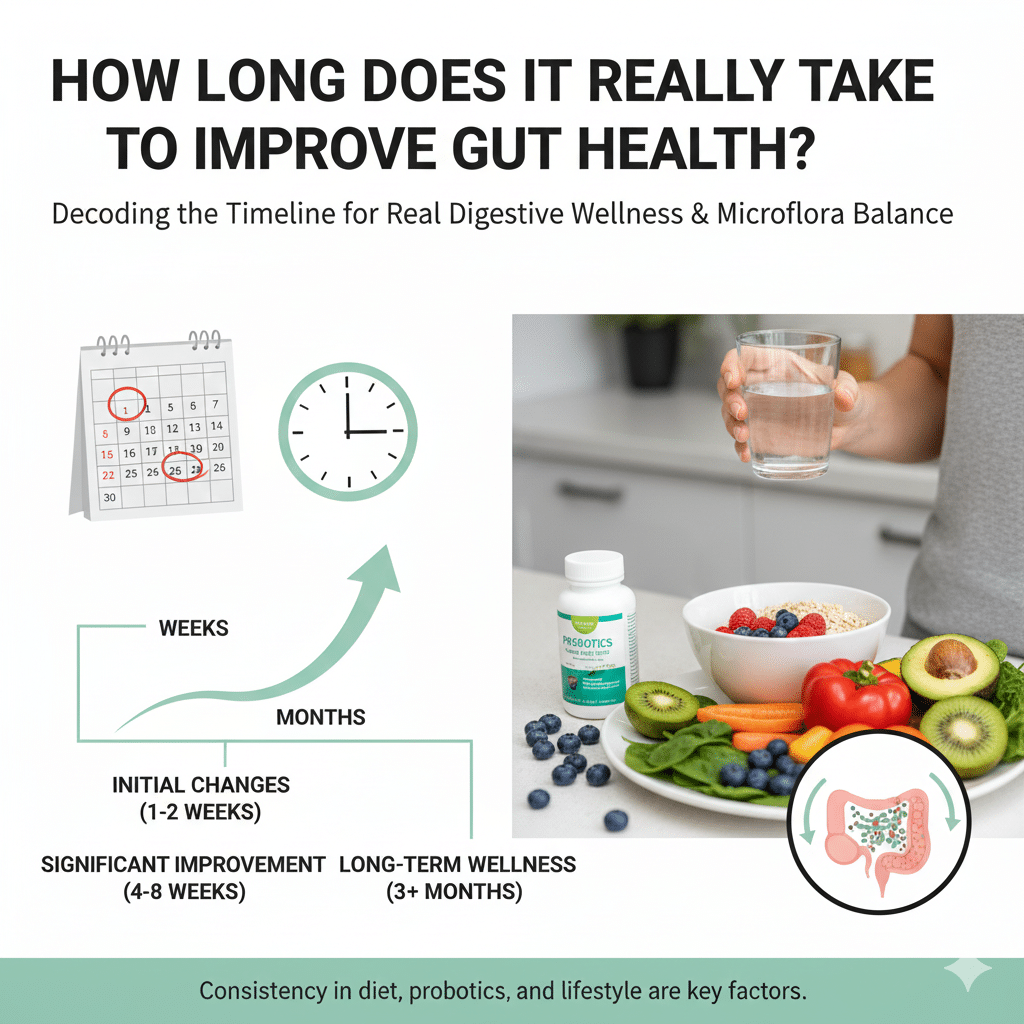
Improving gut health has become a major wellness goal for many Americans, but one question continues to appear in searches, forums, and health discussions:
How long does it actually take to improve gut health?
The answer is not as simple as most people expect. Unlike quick fixes that promise instant relief, gut health improvements are usually gradual and depend on multiple factors, including diet, lifestyle, stress levels, and consistency.
Understanding realistic timelines helps avoid frustration and sets proper expectations for anyone beginning a gut health journey.
Why Gut Health Doesn’t Change Overnight
The gut microbiome is made up of trillions of microorganisms that interact with food, hormones, immune responses, and even mental well-being. This complex system does not reset in a few days.
When changes happen too quickly, they are often temporary. Sustainable gut balance requires time for beneficial bacteria to adapt, multiply, and stabilize.
This is why experts generally emphasize consistency over speed when it comes to digestive wellness.
The Typical Gut Health Timeline (What Research and Users Suggest)
While individual experiences vary, most people follow a similar pattern when making consistent changes to their gut health routine.
Weeks 1–2: The Adjustment Phase
During the first one to two weeks, the body is adapting. This phase may include:
- Mild bloating or gas
- Changes in digestion
- Increased awareness of gut activity
These effects are common when introducing dietary fiber, probiotics, or new eating patterns.
Weeks 3–4: Early Stabilization
By weeks three and four, many people report:
- More regular digestion
- Reduced bloating
- Improved digestive comfort
This is often when the gut begins responding positively to consistent habits.
Weeks 5–8: Noticeable Improvements
After about one to two months, improvements may become more noticeable:
- Greater digestive consistency
- Improved energy levels
- Better nutrient absorption
- In some cases, changes in skin hydration or clarity
This stage reflects a more balanced internal environment.
Factors That Affect How Fast Gut Health Improves
Not everyone experiences the same timeline. Several factors influence results:
Diet Quality
Whole foods, fiber-rich vegetables, and fermented foods support beneficial bacteria. Highly processed diets slow progress.
Consistency
Skipping days or frequently changing routines can delay improvements.
Stress Levels
Chronic stress disrupts gut balance through the gut–brain axis.
Sleep and Hydration
Poor sleep and dehydration can negatively affect digestion and microbial balance.
Supplements vs Lifestyle Changes: Which Matters More?
Supplements alone rarely fix gut health issues. They are most effective when combined with supportive habits.
Some supplements focus only on probiotics, while others include prebiotics and plant-based compounds designed to support gut balance more comprehensively.
Why Patience Matters More Than Product Hopping
One of the biggest mistakes people make is switching products too quickly. Because gut health improvements take time, changing supplements every one or two weeks often prevents real progress.
Sticking with a consistent approach for at least 6–8 weeks is generally recommended before evaluating effectiveness.
Common Myths About Gut Health Timelines
“If it works, I should feel it immediately”
Not necessarily. Many positive changes happen internally before they are felt.
“More probiotics mean faster results”
Higher doses do not always equal better outcomes. Balance and survivability matter more.
“Gut health only affects digestion”
The gut influences energy, immune balance, and even skin health.
When Should You Reevaluate Your Approach?
If no improvements are noticed after:
- 8–10 weeks of consistency
- Dietary improvements
- Stress management
It may be time to consult a healthcare professional to rule out underlying conditions.
Final Thoughts
Improving gut health is a process, not a race. While marketing often promotes quick fixes, real progress usually happens gradually through consistent habits and informed choices.
Understanding realistic timelines helps set expectations, reduce frustration, and support long-term success.
For anyone exploring gut health supplements or lifestyle changes, patience and consistency remain the most important factors.