
Muscle weakness, frequent cramps, soreness, or slow recovery are often blamed on aging or physical effort. However, in many cases, these symptoms are linked to vitamin and mineral deficiencies that directly affect muscle function.
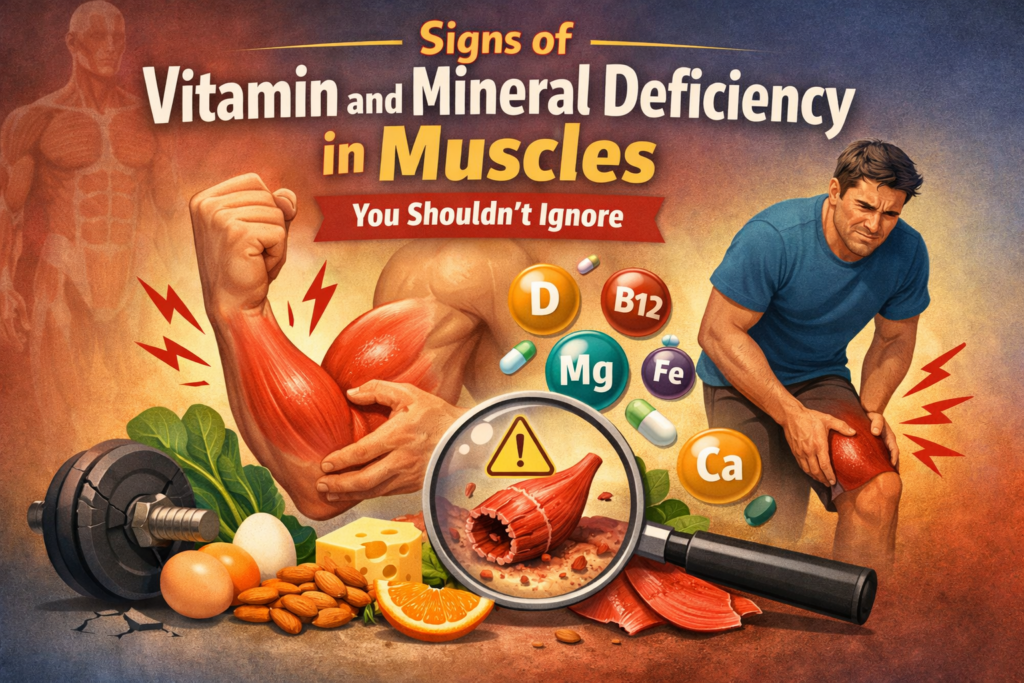
Understanding the signs of vitamin and mineral deficiency in muscles can help you identify potential issues early and support your body more effectively before discomfort becomes chronic.
Why Vitamins and Minerals Matter for Muscle Health
Muscles rely on a steady supply of nutrients to contract, relax, repair, and grow. Vitamins and minerals are involved in:
- Energy production
- Nerve signaling
- Muscle contraction and relaxation
- Tissue repair
When the body lacks key nutrients, muscle performance and recovery are often the first systems to be affected.
Common Signs of Nutrient Deficiency in Muscles
Muscle Weakness
Persistent muscle weakness that doesn’t improve with rest may indicate deficiencies in:
- Vitamin D
- Magnesium
- Potassium
These nutrients play a key role in muscle contraction and strength.
Frequent Muscle Cramps
Cramps are one of the most common signs of mineral imbalance.
Possible deficiencies include:
- Magnesium
- Potassium
- Calcium
Low levels can interfere with proper muscle relaxation, leading to sudden and painful contractions.
Muscle Twitching or Spasms
Involuntary muscle twitching is often associated with:
- Magnesium deficiency
- Calcium imbalance
- Vitamin B deficiencies
These nutrients help regulate nerve signals that control muscle movement.
Slow Muscle Recovery
If muscles remain sore for days after mild activity, it may indicate:
- Low protein intake
- Zinc deficiency
- Vitamin D insufficiency
These nutrients are essential for tissue repair and inflammation control.
Muscle Pain Without Clear Cause
Unexplained muscle pain or tenderness may be linked to:
- Vitamin D deficiency
- Magnesium deficiency
- Chronic inflammation related to nutrient gaps
This type of discomfort is often overlooked or misdiagnosed.
Vitamins and Minerals Essential for Muscle Function
Vitamin D
Vitamin D supports muscle strength, balance, and overall function. Low levels are commonly linked to muscle pain and weakness.
Many adults are deficient due to limited sun exposure.
Magnesium
Magnesium is essential for muscle relaxation and nerve signaling.
Low magnesium levels may result in:
- Cramps
- Tightness
- Muscle spasms
Potassium
Potassium helps regulate fluid balance and muscle contractions.
Low potassium levels may cause:
- Muscle fatigue
- Weakness
- Cramping
Zinc
Zinc supports tissue repair and immune function, both critical for muscle recovery.
Deficiency may slow healing and prolong soreness.
B Vitamins
B vitamins are involved in energy metabolism and nerve function.
Low levels can contribute to:
- Muscle fatigue
- Weakness
- Poor coordination
Who Is More Likely to Have Muscle-Related Deficiencies?
Certain groups are more at risk, including:
- Adults over 30
- Physically active individuals
- People with restrictive diets
- Those under chronic stress
- Individuals with absorption issues
Identifying and addressing deficiencies early can help prevent long-term muscle issues.
Can Supplements Help Correct Muscle Deficiencies?
Supplements can be helpful when deficiencies are confirmed or likely due to diet or lifestyle.
Targeted supplementation may:
- Improve muscle strength
- Reduce cramps and soreness
- Support faster recovery
Supplements work best when combined with balanced nutrition, hydration, and proper rest.
How Long Does It Take to Correct a Deficiency?
Improvement timelines vary depending on the nutrient and severity of deficiency.
In general:
- Some symptoms improve within weeks
- Others may take 2–3 months of consistent support
Regular intake and patience are key.
Final Thoughts
Muscle-related symptoms like weakness, cramps, and slow recovery should not be ignored. In many cases, they are signs of underlying vitamin or mineral deficiencies that can be addressed with the right approach.
By recognizing these signs early and supporting your body with proper nutrition, it’s possible to restore muscle function and improve overall well-being.