Hair thinning is a common concern among women and can be emotionally distressing. While losing a few strands daily is normal, noticeable thinning, reduced volume, or a widening part line may signal underlying issues that deserve attention.
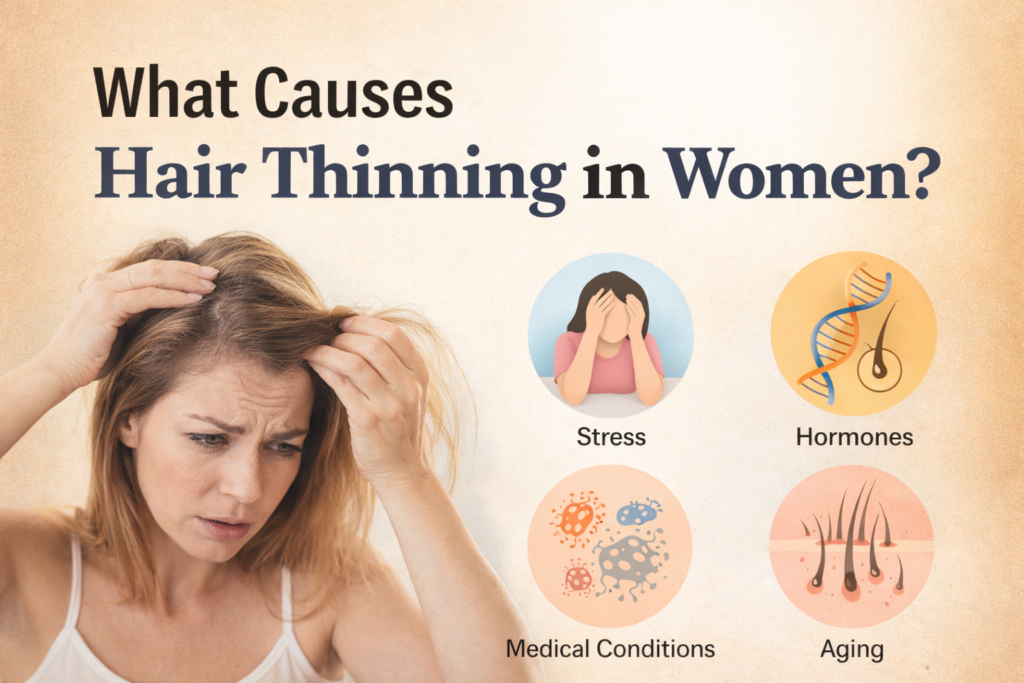
Understanding what causes hair thinning in women is the first step toward addressing the problem effectively. In most cases, hair thinning is not caused by a single factor, but by a combination of hormonal changes, nutritional deficiencies, lifestyle stressors, and aging.
This article explains the most common causes of hair thinning in women and what can be done to support healthier hair growth naturally.
Is Hair Thinning Normal for Women?
Hair naturally goes through cycles of growth, rest, and shedding. However, when shedding increases or regrowth slows down, hair may begin to look thinner over time.
While genetics can play a role, many cases of hair thinning in women are related to modifiable factors, meaning they can often be improved with the right approach.
Hormonal Changes
Hormones have a significant impact on hair growth. Fluctuations in estrogen, progesterone, and thyroid hormones can disrupt the hair growth cycle.
Common hormonal triggers include:
- Postpartum changes
- Perimenopause and menopause
- Thyroid imbalances
- Polycystic ovary syndrome (PCOS)
When hormone levels shift, hair follicles may spend more time in the resting phase, leading to increased shedding.
Nutritional Deficiencies
Hair follicles are highly sensitive to nutrient availability. Deficiencies in key vitamins and minerals can weaken hair structure and slow growth.
Common nutrient deficiencies linked to hair thinning include:
- Iron
- Biotin
- Zinc
- Vitamin D
- Protein
Even mild deficiencies can affect hair density over time, especially in women with restrictive diets or absorption issues.
Chronic Stress
Physical and emotional stress can push hair follicles into a resting phase, a condition known as telogen effluvium.
High stress levels may result from:
- Work-related pressure
- Sleep deprivation
- Illness or surgery
- Emotional trauma
Stress-related hair thinning is often temporary, but prolonged stress can make recovery slower.
Aging and Reduced Hair Growth
As women age, hair growth naturally slows down. Hair follicles may shrink, producing thinner strands, and regrowth becomes less consistent.
This process is gradual and often becomes noticeable after the age of 30 or 40, especially when combined with hormonal and nutritional changes.
Scalp Health Issues
A healthy scalp is essential for healthy hair growth. Conditions that affect the scalp can interfere with follicle function.
Common scalp-related issues include:
- Inflammation
- Excess oil buildup
- Poor circulation
- Product buildup
Addressing scalp health can significantly improve the environment for hair growth.
Can Supplements Help With Hair Thinning?
Supplements are not a cure, but they can support hair health when thinning is related to nutritional gaps or increased nutrient demands.
Certain supplements may help by:
- Supporting keratin production
- Improving scalp circulation
- Supporting hormonal balance
- Strengthening hair structure
When combined with a balanced diet and healthy lifestyle, targeted nutritional support can play a helpful role.
How Long Does It Take to See Hair Improvement?
Hair growth is a slow process. Most women begin to notice improvements after 3 to 6 months of consistent lifestyle and nutritional support.
Patience and consistency are essential, as hair follicles need time to return to a healthy growth cycle.
Final Thoughts
Hair thinning in women is common and often influenced by multiple factors, including hormones, nutrition, stress, and aging. The good news is that many of these factors can be addressed with informed, consistent changes.
By understanding the root causes and supporting the body properly, it’s possible to improve hair strength, density, and overall scalp health over time.